

Many shipments. One container. No confusion.
LCL/FCL sorting, packing and labelling, so mixed cargo separates cleanly on arrival.
Shipping a partial container is expensive, and coordinating multiple small shipments yourself multiplies the paperwork and the risk of something going missing. Most businesses don't have the volume to justify a Full Container Load on their own.
We combine your shipment with others heading the same way, then separate, inspect and distribute everything correctly once it arrives — so you get container-rate efficiency without losing track of your own cargo.
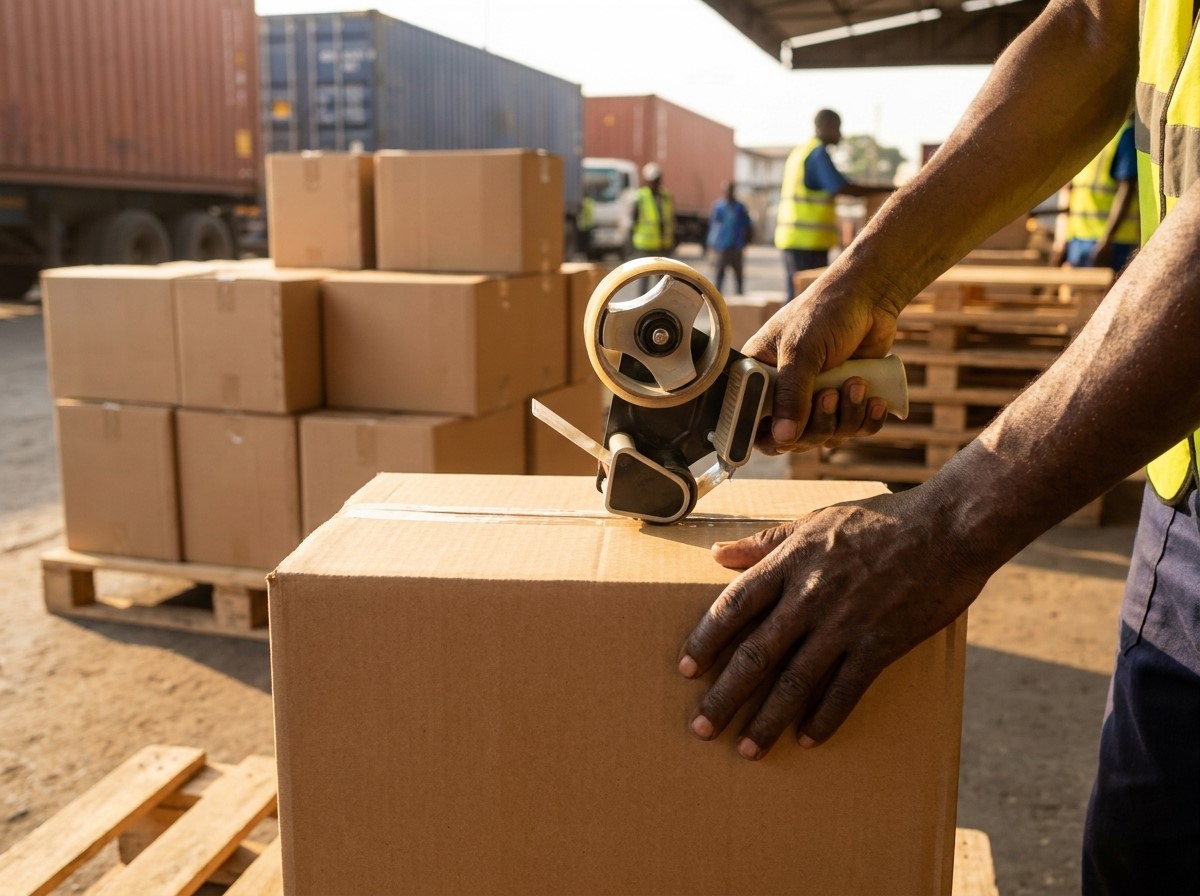
Receipt to distribution.
Receive & sort
Incoming shipments received and sorted by destination and cargo type.
Pack & label
Cargo packed and labelled for safe handling and clear identification.
Consolidate
Shipments loaded into a shared container as LCL, or a dedicated FCL for volume.
De-consolidate & distribute
On arrival, cargo is separated, inspected and distributed to each recipient.
What's included.
- Less than Container Load (LCL)
- Full Container Load (FCL)
- Cargo sorting
- Cargo packing
- Cargo labelling
- Cargo inspection
- Distribution coordination
- Documentation management
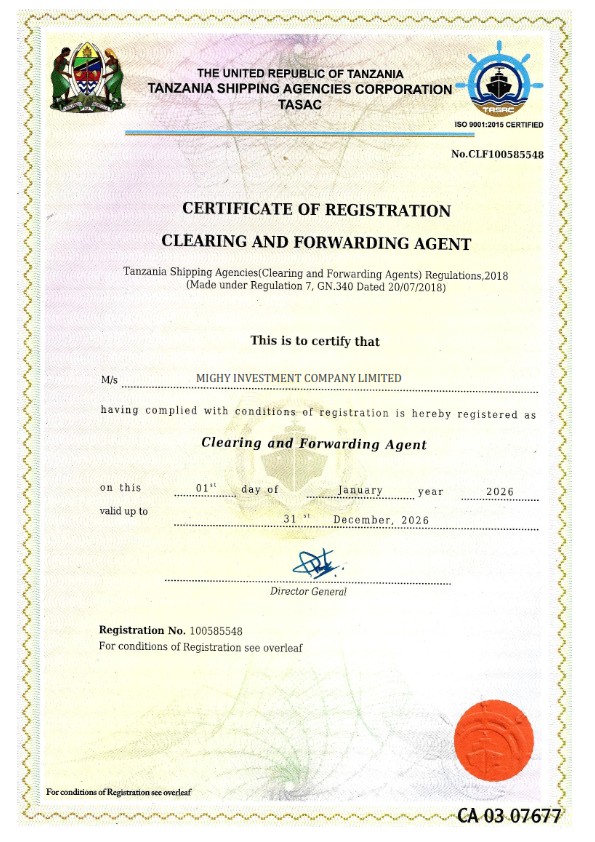
Tanzania Shipping Agencies Corporation
Clearing & Forwarding Agent Registration
100585548
REGISTERED 01·01·2026 — VALID TO 31·12·2026

Handling
Common questions.
LCL (Less than Container Load) shares a container with other shipments and suits smaller volumes; FCL (Full Container Load) is a dedicated container for your cargo alone, typically more cost-effective at higher volumes.
Ask which fits your volumeEvery shipment is labelled and logged at packing, and de-consolidation follows the same manifest used to load it — so separation on arrival matches exactly what went in.
Yes — cargo inspection is part of our standard consolidation and de-consolidation process, both before loading and after arrival.
Start a clearance